Making “Sun’mores” at 100ºF
Posted: June 25, 2025 Filed under: Creations, Explorations, Food, How-to, That Totally Worked Leave a commentYesterday the temperature in Boston, at Logan Airport out by the water, hit a new record of 102ºF (39ºC). The temperature outside my window in Somerville was 105ºF (41ºC), and I said “It’s so hot that you could make s’mores by just stacking the ingredients outdoors.” Ness said “you should try it! it seems like a you thing to do”, and they were right and I bet you can already see where this is going.
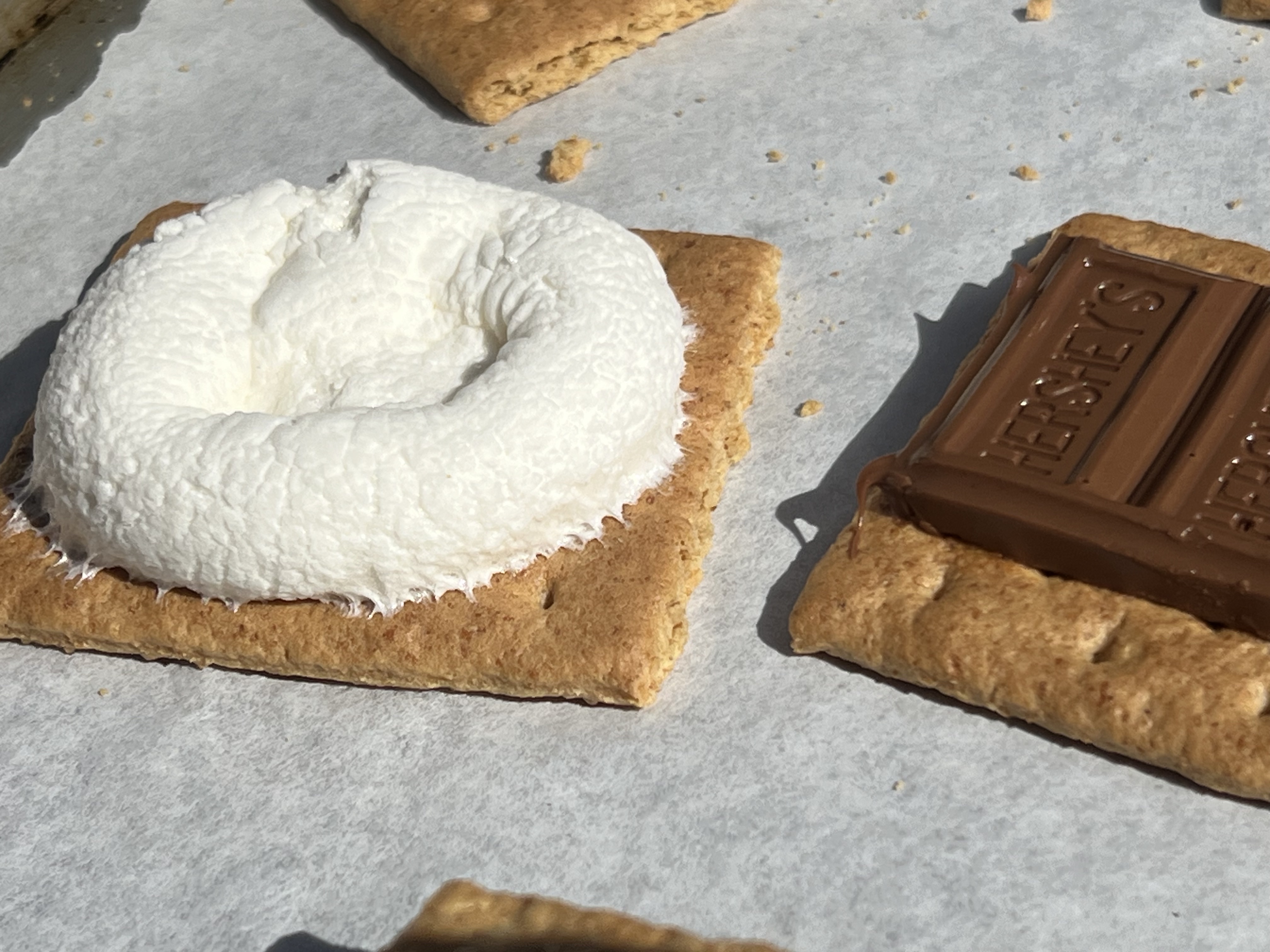
I stacked some chocolate and some marshmallows on graham crackers, arranged it all on a baking sheet, and put it outside on my porch deck. It was 3:46PM, and the sun was already well past its highest point, but the air itself was scorching and the chocolate started melting immediately.

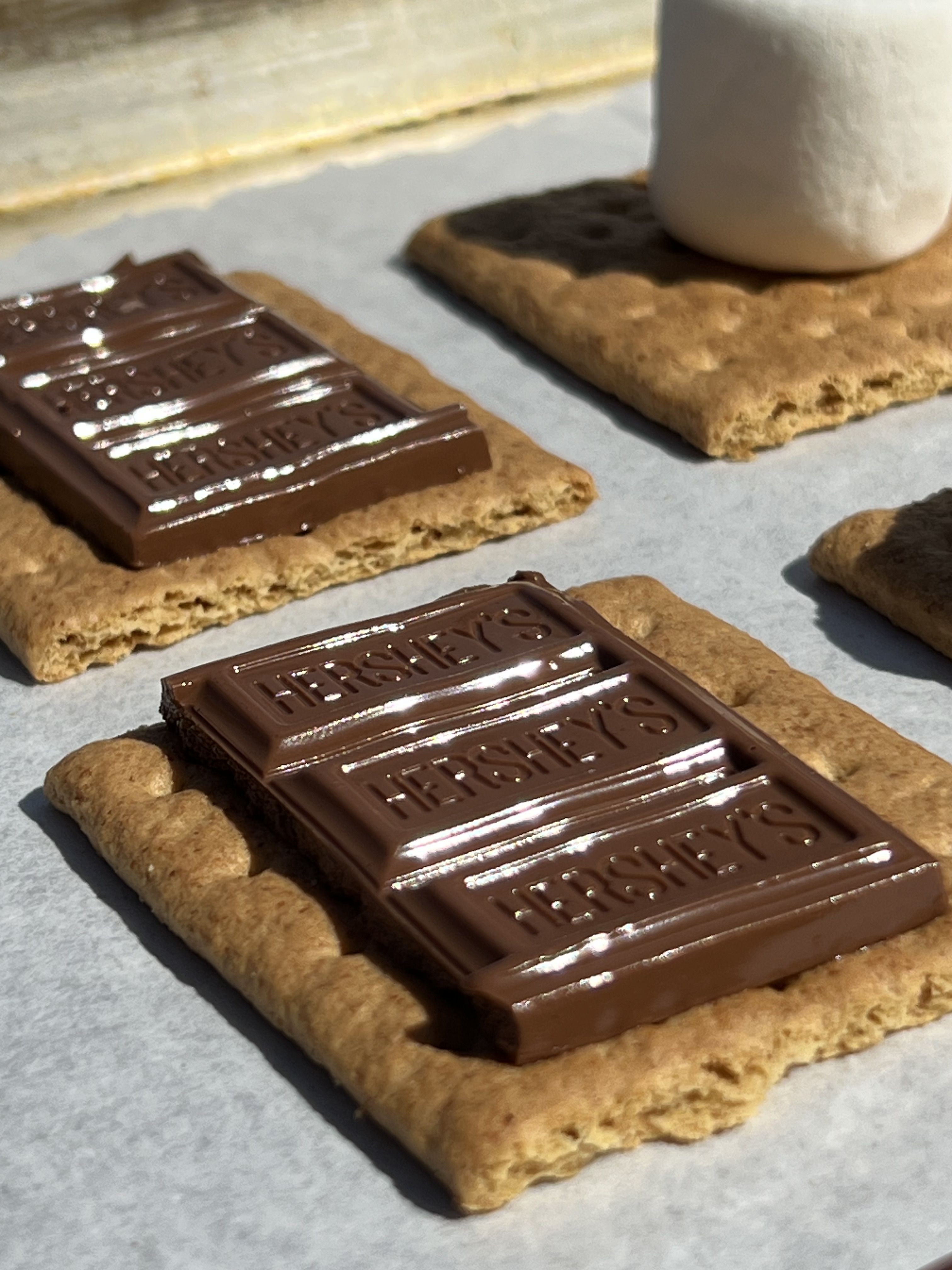
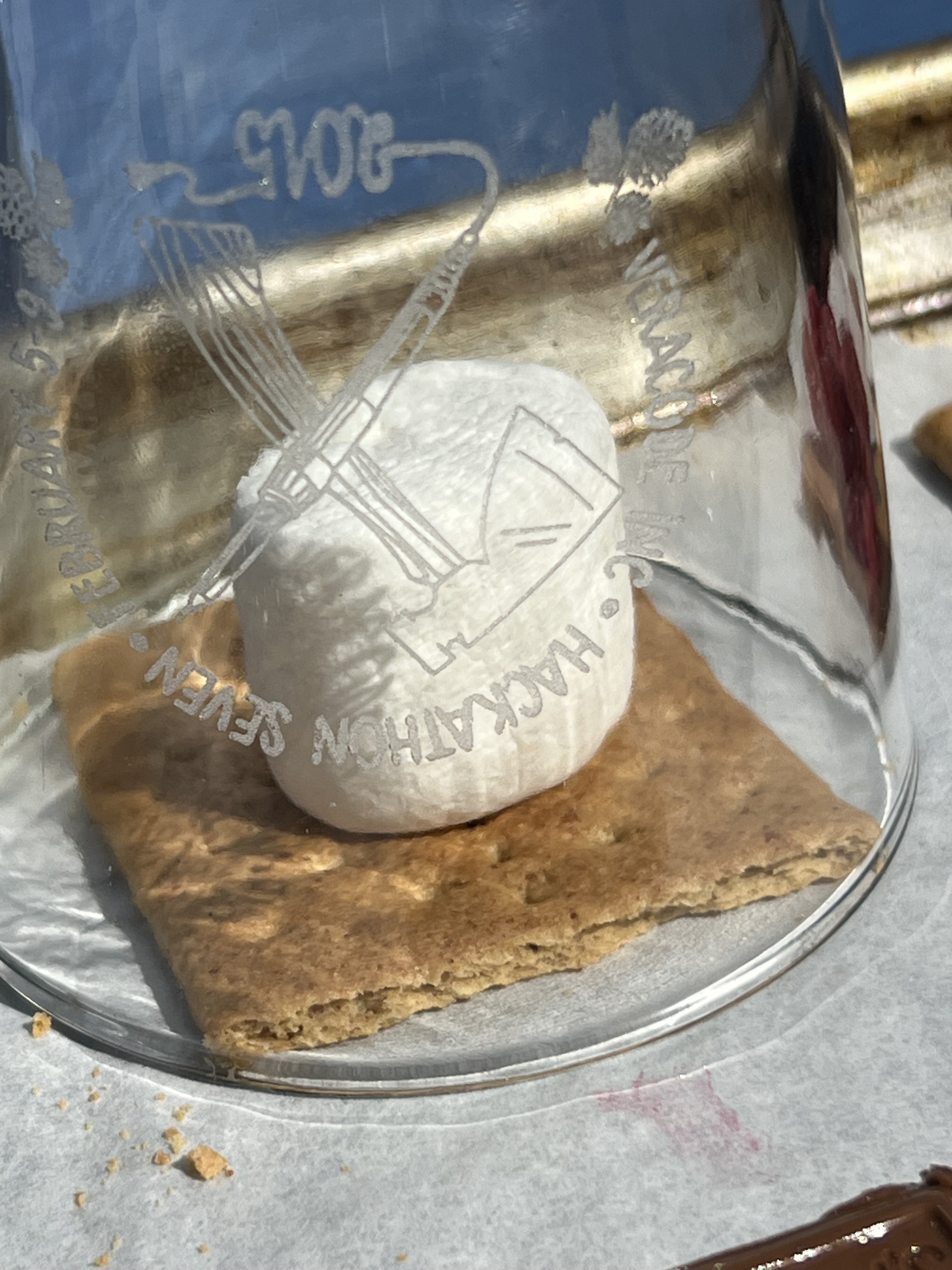
I had to move the tray from the front of the house to the back to keep it in direct sunlight. At the same time, I decided to try an experiment: putting a glass ‘greenhouse’ dome over some of the marshmallows to see if it helped them melt. For that I used pint glasses, which coincidentally (I presume) are almost exactly the right size for a standard graham cracker.
Now things were really heating up. The air temperature was 104ºF (41ºC), but the chocolate’s dark surface had allowed it to absorb more of the sun’s energy, and I measured its temperature as 159ºF (71ºC)!
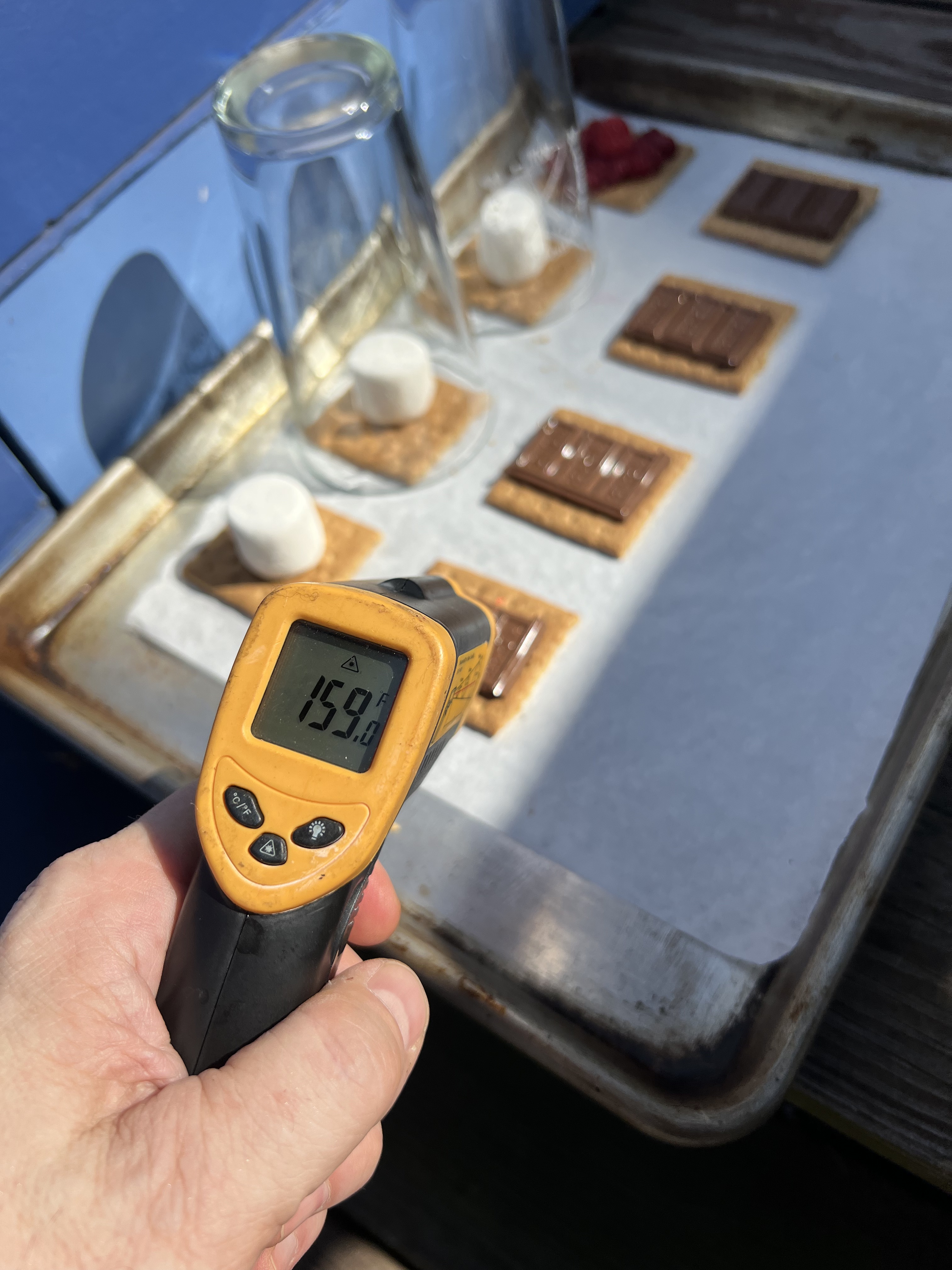
In addition to the traditional graham+chocolate+marshmallow combination, Molly set up a fruit combination: graham+chocolate+raspberries, which you can also see in the first photo above.
The ingredients had now been outside for just exactly one hour, the sun was starting to get lower in the sky, and even though I was only running outside for quick checks on the ingredients, I was getting overheated and it was time to move on.
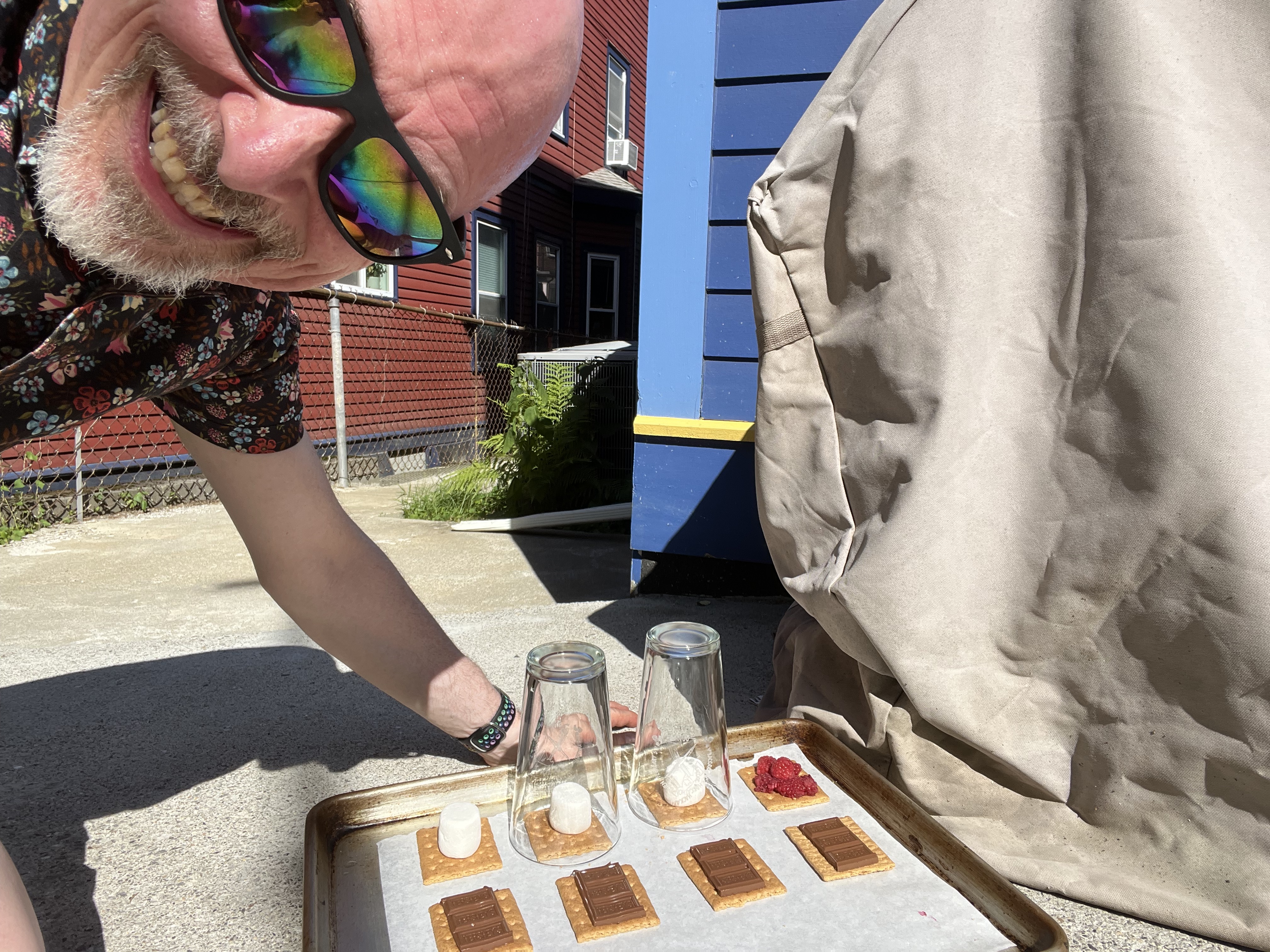
Time to assemble the final product! But: would the chocolate really be entirely melty? Would the marshmallows really be gooey all the way through? And would the greenhouses have made any difference? It was time to find out.
Although the marshmallows hadn’t deformed just sitting there, they were really quite gooey, and the greenhoused marshmallows were, in fact, even softer and gooier! Assembling the final sandwiches was easy, and everything melted and mixed and blended, just like campfire s‘mores.

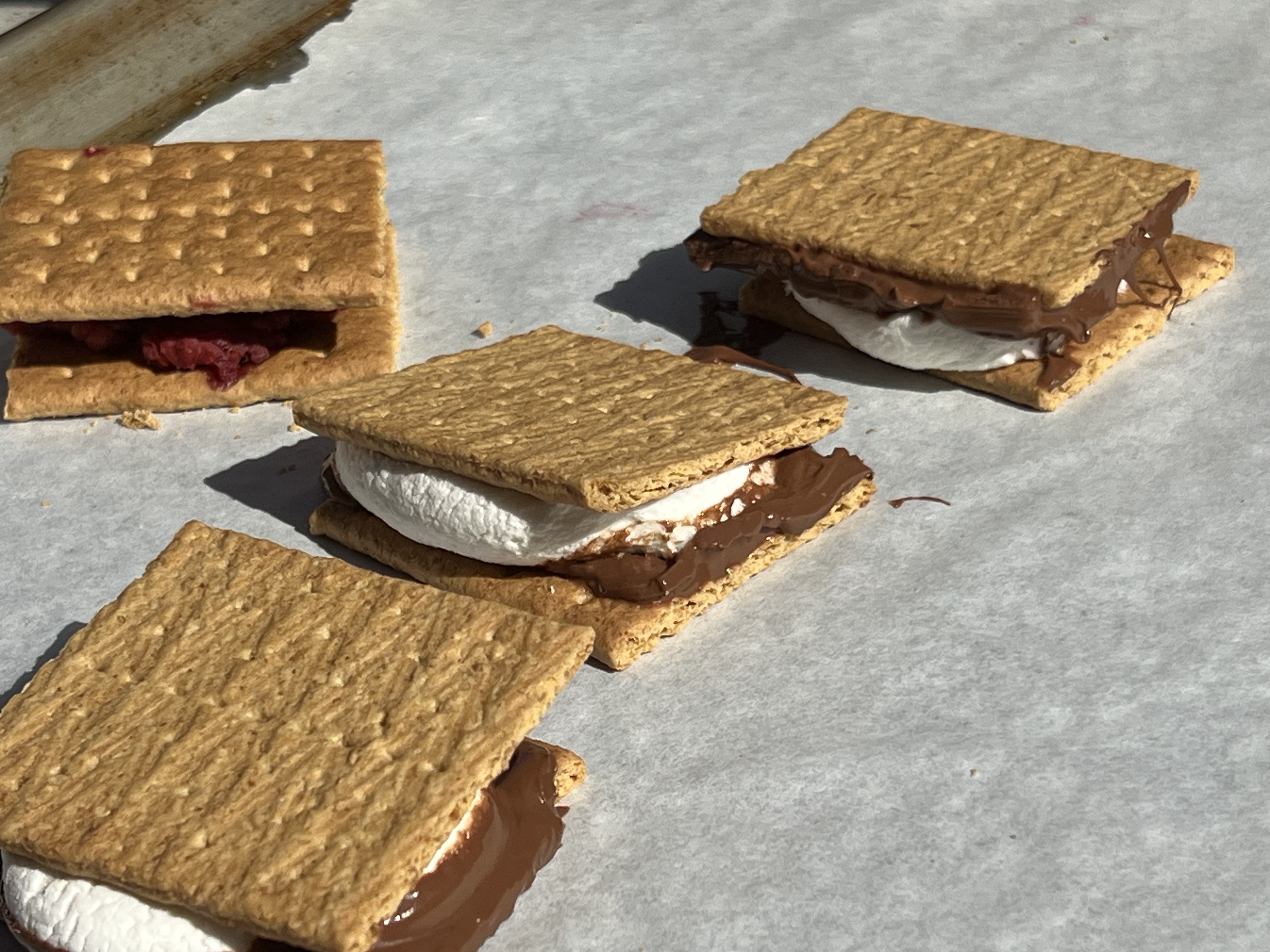
I bought the (very hot!) baking sheet indoors, where Molly, Sarah, I, and a couple of area teens did some long-awaited taste-testing. It worked! We had tested my hypothesis that you could make s’mores just by putting the ingredients outdoors on a 100ºF day, and found that you can, and should! If we had started closer to solar noon, and if we’d put a greenhouse over all the ingredients (perhaps a glass 9×13 baking pan, upside down?) I think they would have gone much faster, perhaps in 20-30 minutes.
The fruit combination, raspberry+chocolate+graham was particularly delicious, and felt extra summery. Molly suggested next time doing fruit+cheese, and Sarah joined in to say that if we did that next time, that we should put it on something better than a graham cracker.
After some back and forth, we officially named these “sun‘mores“, and decreed that they can only truly be created on days when the temperature hits 100ºF, which it certainly did yesterday!
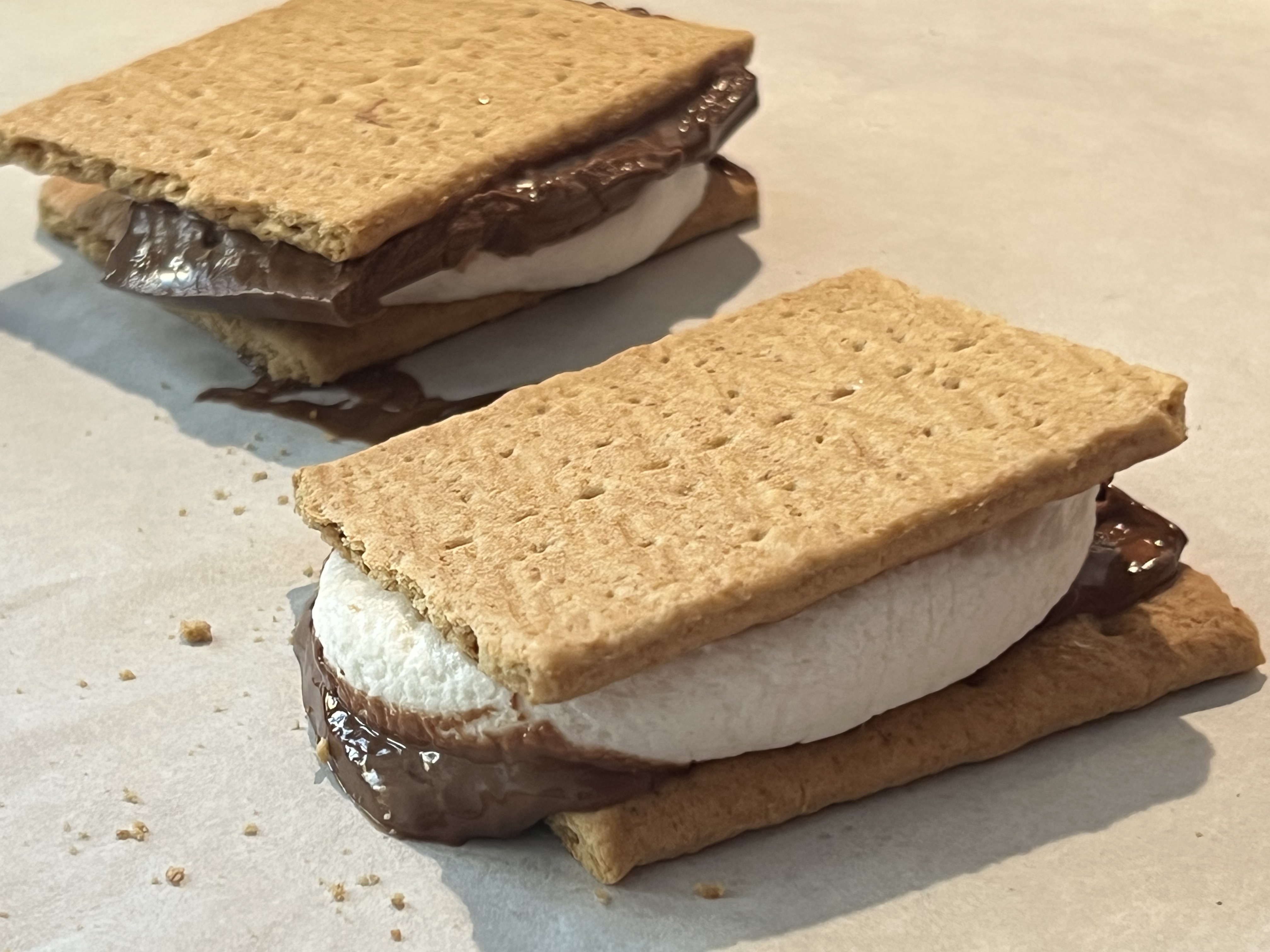
And when Ness saw all this they exclaimed simply, ”by jove!!!”

Remixed cookie cutters
Posted: March 18, 2012 Filed under: Explorations, Food, That Totally Worked | Tags: cookie cutter, cookies, DIY, food, March 17, March 17th, metalwork, remix, St. Patrick's Day 1 CommentThis past weekend E and I went out to the Berkshires to visit some longtime friends. Since St. Patrick’s Day fell on Saturday, E suggested that we all make St. Patrick’s Day cookies, and decorate them.
While the dough was being assembled, we started looking through the house cookie cutter collection for shamrocks or four-leaf clovers, but no luck. There were all kinds of other shapes, though, and twenty minutes and a pair of needle-nose pliers later, I had remixed one small cookie cutter into a shamrock, and one large cookie cutter into a four-leaf clover.

When the dough was ready, I cut a test cookie

Looking good (enough!), we baked and then decorated the cookies. The shamrock was a little bit on the small side, but the four-leaf clover came out respectably well!

That totally worked!
So What Did We Learn? We learned that metal cookie cutters can remixed and remade into new shapes. We learned that the best overall shape for a cookie is “blob”, and that “blob with minor details” is the second best shape. Fine detail doesn’t work, and remember: you’re not making stamps that will be inked and pressed onto paper: spindly tendrils of design – skinny peninsulas- don’t work. Filigree is right out. If you’re going to make a new shape out of an old one, pick an old one with roughly the same length perimeter. Small old cookie cutters make for (too) small new cookie shapes. When you start with an old cookie cutter, bend it out into a flat circle first, then work into the desired target shape. Cookies are dangerously tasty.
-Mark
Jerk Chicken, Sugar Reef Style++
Posted: March 15, 2012 Filed under: Food | Tags: chicken, chili, cooking, fiery, food, habanero, habaneros, hot, jerk chicken, pepper, peppers, recipe, scotch bonnet, spicy, yum 3 CommentsThis extremely tasty jerk chicken recipe comes from the awesome and sadly now-defunct Caribbean restaurant in New York City called Sugar Reef. It appeared in the sadly now-out-of-print Sugar Reef Caribbean Cookbook. Despite all the sadness, this recipe still makes people very happy.
The original recipe called for half the quantities of dry spices (except salt) as these, and included the note to double them for a more authentic flavor. These quantities have already been doubled (except the salt), and it’s delicious and spicy. If you wish, you can cut the dry ingredients (except salt) in half for a more mild flavor, but if you’re looking for a more mild flavor, then what the heck are you doing cooking jerk chicken?
I’d note that the heat of peppers can vary almost as much as peoples heat tolerances; carefully taste-test your peppers and adjust the quantity accordingly.
Dry Ingredients
- 2T ground allspice
- 2T ground thyme
- 3t cayenne pepper
- 3t ground black pepper
- 3t ground sage
- 1.5t ground nutmeg
- 1.5t ground cinnamon
- 2T salt
- 4T garlic powder
- 2T sugar
Liquid Ingredients
- 0.25c olive oil
- 0.25c soy sauce
- 0.75c white vinegar
- 0.5c orange juice
- juice of one lime
Chunky Ingredients
- 1c chopped white onion
- 3 green onions, finely chopped
- 1 scotch bonnet, habanero, or other very hot pepper, de-seeded and finely chopped. I’ve used more when the peppers have been too tame for my taste, and on at least one occasion, it still wasn’t enough for me. But maybe that’s my problem.
Chicken
- 4 chicken breasts, trimmed; 6-to-8oz ea, or at least that’s what the recipe said in the cookbook, and that’s what they served in the restaurant. I’ve used boneless chicken thighs and been at least as happy, if not happier, with them.
Directions
- In a large bowl, combine the dry ingredients.
- With a wire whisk, add the liquids.
- Add the chunky ingredients and mix well.
- Add the chicken breasts, cover, and marinate for at least one hour, longer if possible.
- Preheat outdoor grill.
- Grill chicken breasts for 6 minutes each side or until fully cooked. While grilling, baste with marinade.
Alternatively, instead of grilling the breasts (or thighs) whole, you can cut the chicken into large chunks, and grill it on skewers, turning them every couple of minutes.
The original recipe ended with “Heat the leftover marinade and serve on the side for dipping,” and while I’m skeptical about serving goo that’s had raw chicken sitting in it, I think if you “heat” it all the way to a boil first, it’s probably fine.
They also say that this recipe “serves 4”, but I’ve found that if you make up the specified amount of jerk marinade, you can easily marinate twice as much chicken in it. Put the marinade and the chicken in a heavy-duty zip-lock bag for efficient marinating.
Enjoy!
-Mark
 blog.kriegsman.org